設定
設定
 快速送達
快速送達
 免運費
免運費
 國貿條規
國貿條規
 付款類型
付款類型


 商城產品
商城產品

Meeting the Challenge of Designing an Energy-Harvesting Backpack
資料提供者:Electronic Products
2012-05-02
The idea of an energy-harvesting backpack has been around for a while. The first attempt at designing one relying on only the energy of human locomotion was undertaken by Larry Rome at the University of Pennsylvania in 2005. Rome’s research focused on the design of muscle and its use during locomotion. His work on the physiology behind the movement of animals spurred Rome to thinking about how the regularity of motion in simple walking would be a good input for the oscillation of a mass on a spring. He designed his system to translate the motion of the vertical mass to a rotating axle with a rack and pinion gearset. Rome’s energy transducer was a simple dynamo.
Since then, much of the motivation for wearable energy scavenging devices has come from the military. In 2007, the Director of Defense Research and Engineering launched the Wearable Power Prize (WPP) program, the first-ever tri-service, prize-based R & D competition. The U.S. Department of Defense hoped to use the prize to motivate designers to create a system that could lighten or eliminate the battery content needed to power electronics carried by 21st century foot soldiers. In announcing the prize, a DoD spokesperson said, “One of the more significant limitations for our ground operations is available power.” The limitation was primarily how much extra battery load soldiers can be reasonably expected to carry on their backs. According to figures used by the military, every watt-hour of battery replaced will save about 10 g of mass.
With energy harvesting still an emerging field at the time, the DoD prize was announced. Early Wearable Power Prizes went to designs based on fuel cells. Now it is not hard to imagine that future designs will depend on energy scavenging to meet the infantry soldier’s needs for powering portable gear, since renewable sources of electricity are plentiful, even on the battlefield. Like Larry Rome, other researchers have explored using an oscillating mass concept as the heart of the backpack system since it offers a very high power output and can be designed into the backpack frame to avoid displacing too much cargo volume. However, the wearer must be walking in order to scavenge the energy of the motion, a scheme that will not be effective when the wearer is standing still (or hunkered down to keep out of the line of fire).
The search for an energy-harvesting system to replace standard disposable batteries in a military backpack is now an international effort and its focus has turned to solar energy. In Canada, the Department of National Defense (DND) has an open tender for a system they call Integrated Soldier Power System Prototypes, or ISSP. Similarly the Australian military has a $2.3 million contract with its own Australian National University (ANU) to develop portable solar power for their foot soldiers (Figure 1).
ANU said the key to its wearable solar panels is a technology developed at the university called “SLIVER,” which is now being used in commercial applications by photovoltaic module supplier Transform Solar (Boise, ID). Using flexible cells with the same thickness of a sheet of paper allows high power to weight ratios to be achieved. The cells are also bifacial, allowing modules to be constructed that allow light to be absorbed from both faces, which helps the SLIVER modules maintain more power yield than traditional monocrystalline technology cells during partial shading conditions; when shade happens, traditional solar modules experience a loss of power disproportionate to the amount of shaded area, where SLIVER modules have a near-linear partial shading response, according to Transform.
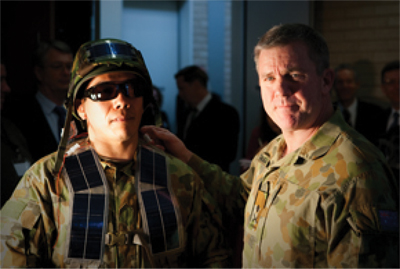
Figure 1: Wearable solar power for the Australian military. (Courtesy of the Australian National University.)
Design factors
For extended periods, a soldier’s backpack offers a large surface area of good potential exposure to sunlight. In addition, in hot climates solar panels also are ideally mated to activity patterns, in that soldiers will typically need to rest more during mid-day hours to avoid heat exhaustion during the most intense periods of solar radiation. In R & D labs, textile-based photovoltaic cells are often touted for these applications. Indium tin oxide (ITO), used as a common transparent electrode in polymer-based solar cells due to its good efficiency and transparency properties, is quite expensive, however, and generally too brittle to be used for flexible substrates such as those used in fabrics.
Instead, active photovoltaic fibers consisting of nano-layers of polymer-based organic compounds are being explored by researchers. At the risk of losing the reader amidst a swarm of chemical formulae, the photoactive layer of PV fiber solar cells under consideration is comprised of MDMO-PPV:PCBM – poly(2-methoxy-5-(3',7'-dimethyl-octyloxy))-p-phenylene vinylene, (MDMO-PPV), as an electron donor and (6,6)-phenyl-C61-butric-acid (PCBM) as electron acceptor.
Fortunately, the design engineer does not have to turn to exotic technology to develop viable solutions that are easy to incorporate into an energy-harvesting backpack design. For example, amorphous silicon solar cells from Sanyo are very well suited to the backpack platform. Thinking of the backpack design in cubic terms, we have a top, two sides, and the large backside at our disposal. The top flap offers the best solar receptor area and could accommodate at least two panels like the Sanyo AM-5902CAR, which is 150 x 37.5 mm (Figure 2). Likewise, each side of the pack allows the addition of two more AM-5902CAR units. The main area of the pack’s back could include 10 such panels. That totals 16 panels, with each providing 7.7 V open circuit voltage and 30 mA short-circuit current. These panels each produce 150 mW under light conditions of 50,000 lux, giving the solar cell backpack shell potentially 2.4 W of harvested power in modest direct sunlight.
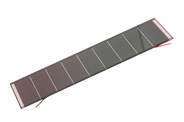
Figure 2: Sanyo Energy AM-5902CAR solar cell. (Courtesy of Sanyo Energy.)
As anyone who has carried even a modestly laden pack around for any period of time will know, there is a significant amount of strain applied to the shoulder straps. Why let that energy go to waste? Piezoelectric transducers conveniently convert this into useful electrical energy. There is still some customization required to maximize this source as research groups have noted. The material widely used for strain sensing as well as strain-based harvesting is polyvinylidene fluoride, or PVDF. Although the process of converting PVDF from an inert polymer into a poled piezoelectric film is a complicated one, it is understood well enough to process a very useful strain-harvesting transducer. With a Young’s modulus of 8.3 GPa, the PVDF can deform significantly under high levels of strain. Since charge production is the result of the deformation of the piezoelectric material, PVDF is very useful for scavenging power in this application. However, it is the electrical contacts to the PVDF that prove problematic when employing the material in a system such as a shoulder strap where one hopes to maximize the allowable strain to, in turn, maximize energy production.
Conventional methods for contacting the PVDF typically depended on the use of conductive epoxies or silver paint. Unfortunately, these approaches do not take full advantage of the flexibility of the PVDF. The Young’s Modulus of PVDF is comparable to other high-density polymers. One research team realized that the less-than-flexible contacts were the choke point for producing an effective strain harvester. The Arizona State University and Michigan Technological University collaboration concentrated their efforts on finding a more flexible contact scheme. They turned to NanoSonic (Blacksburg, VA), developers of low modulus conductive sheets. This NanoSonic material is dubbed “Metal Rubber,” and for good reason. The material maintains its conductivity as it is stretched to 10 times its original length. This extremely low modulus conductor was well matched to the needs of the shoulder strap harvester. The team engineered backpack straps that generate about 45 mW of power (walking at 3 mph with a 100 lb. pack). By targeting the hikers’ sore point as a potential power source, the researchers claim their device can power an LED headlamp or an iPod Nano.
There is one more energy source to add to mix of all-in-one energy-harvesting backpack designs. Since we have been talking about hauling around hundred pound packs in difficult terrain and under stressful conditions, such as facing enemy combatants, experienced hikers are no doubt familiar with the heat build-up that takes place between your back and the pack. A thermal transducer or thermoelectric generator can add that energy to the mini-grid system of the backpack without piling on much additional weight.
Thermoelectric generators are usually Peltier modules. These modules are available in a wide range of sizes from CUI Devices. A few larger power output devices could be incorporated into the back plate or lumbar pad of the pack. The CPM-2F from CUI Devices is 70 x 70 mm and provides 46 W at 50°C. Better contouring and flexibility would be offered by creating a grid of many smaller modules like the 15 x 15 mm CP60140 (Figure 3), also from CUI Devices, that gives an output of just over 7 W at 27 °C.
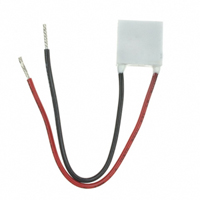
Figure 3: CUI Devices CP60140 Peltier module. (Courtesy of CUI Devices)
Summary
Even considering size or weight constraints for the large backpack, military or otherwise, there are many opportunities for capturing ambient energy in the design of an all-in-one energy-harvesting backpack. How much total power could be extracted? That depends on many factors, including the design of the charge control electronics of this mini electrical grid system. With energy flowing from so many varied sources, it could be significant. Better still, as we have seen several ambient sources could work synergistically with one coming online as others wane. For more information on the products mentioned use the links provided to access product pages on the DigiKey website.
聲明:各作者及/或論壇參與者於本網站所發表之意見、理念和觀點,概不反映 DigiKey 的意見、理念和觀點,亦非 DigiKey 的正式原則。